
How to Socialise Your Puppy the Right Way
(And why it’s way more about calm confidence than chaos and cuddles)
If you’ve ever googled “puppy socialisation” and felt overwhelmed by conflicting advice, trust me, you’re not alone. We’ve made socialisation sound like a race to meet as many dogs, people, kids, scooters, wheelie bins, baristas, and elderly Labradors as possible… all before the puppy turns 16 weeks old.
But real socialisation? Proper socialisation?
It’s quieter. Gentler. More intentional.
And honestly… way less chaotic than most people think.
Modern trainers actually agree on this one (which is rare!). What we don’t seem to be doing is getting this message out to everyday puppy owners. So consider this your friendly nudge in the right direction with some stories, mistakes, and lessons I learned the hard way.
Start Puppy Socialisation Straight Away…
Just Start Softly
People still wait around for that second vaccine as if it’s the magical permission slip for the outside world.
But here’s the truth:
Puppies need to see the world long before their paws touch the ground.
And you can absolutely do this safely.
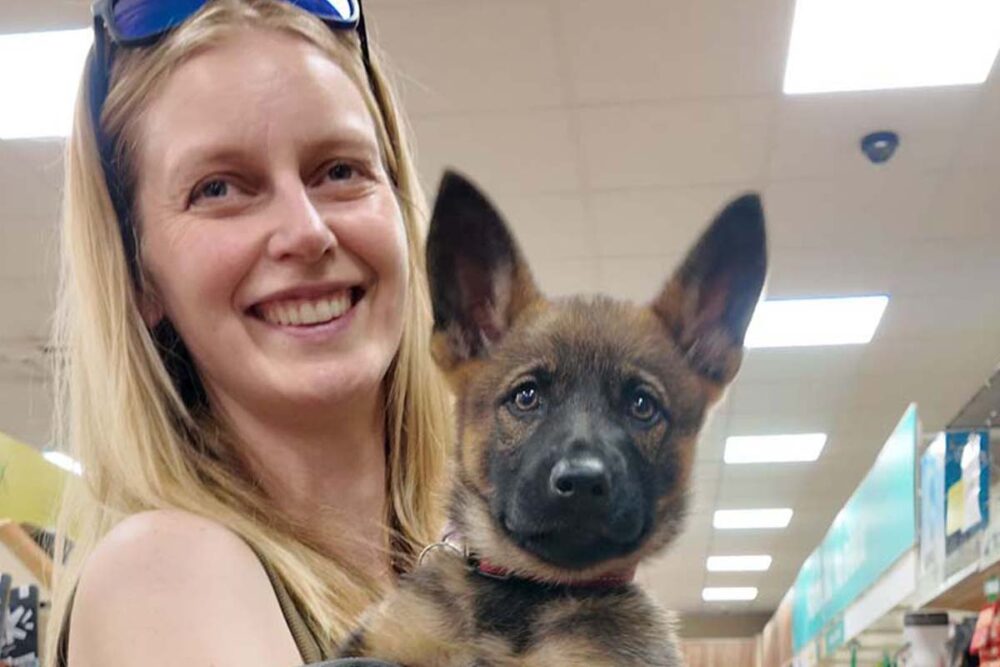
Grab a normal backpack — nothing fancy — line it with towels or an old kitchen towel (trust me on this one), pop your puppy in, hold the bottom with one hand, and off you go. Wear it on your front like a toddler carrier. Your puppy gets the sights, smells, sounds… with zero risk and without being bowled over by every stranger who spots them.
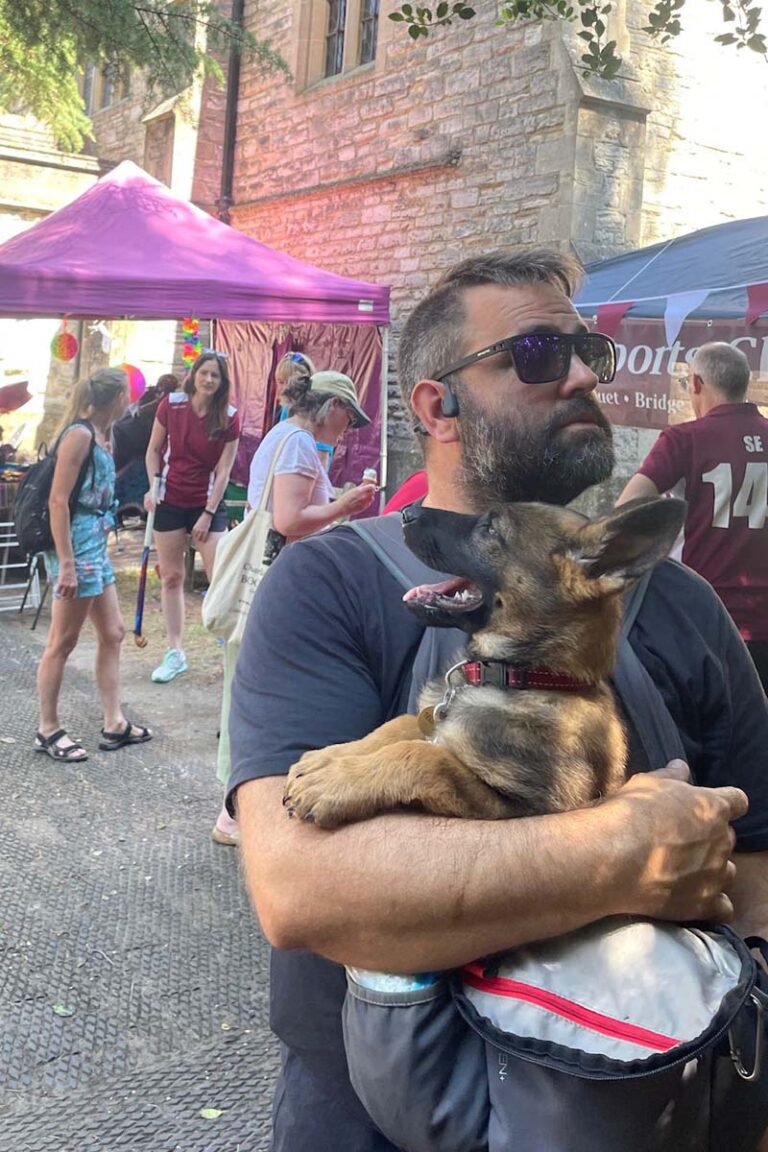
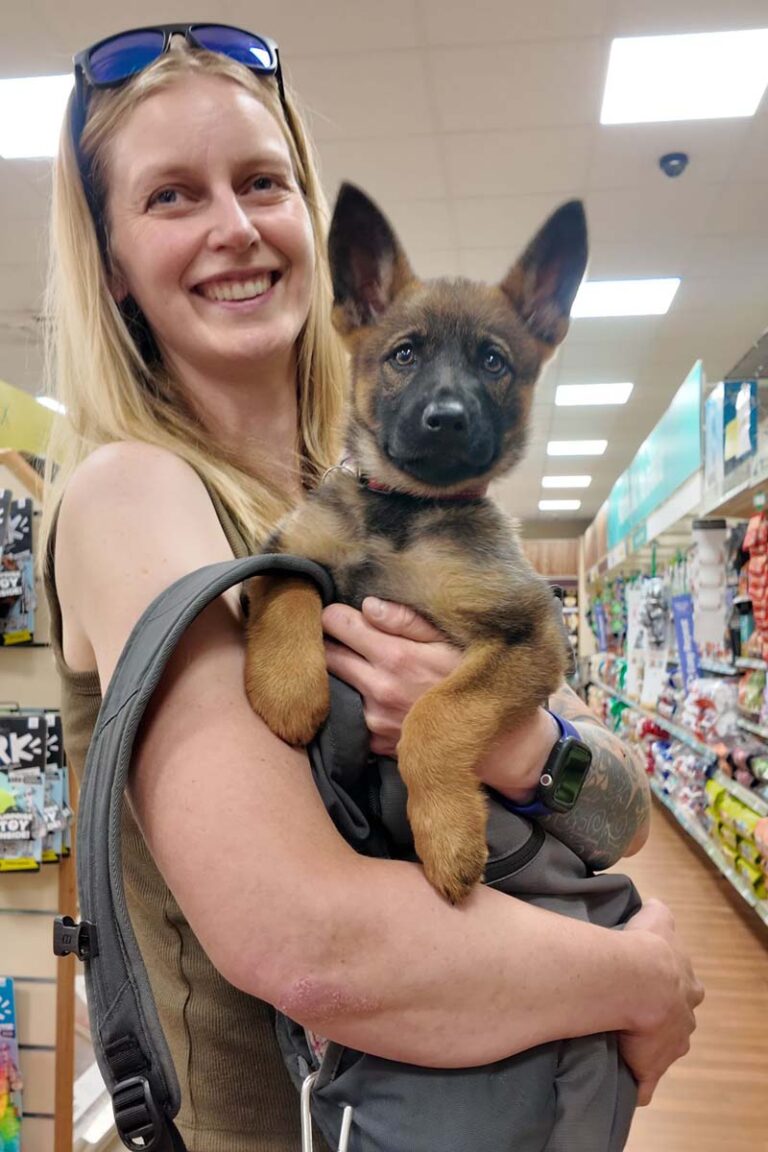
I wish, more than anything, that I had done this more with Magik. She was (and still is) a dog who found the world overwhelmingly exciting. I was so busy worrying about training and doing things “right” that I forgot she simply needed to learn how to relax in new places. Looking back, I wish we’d just sat somewhere quiet together and watched the world go by. No commands. No pressure. Just… being. And lots and lots of practice!
Bonus: the backpack is also a polite “barrier” against well-meaning people who can’t help themselves from diving in for a cuddle.
Puppy Socialisation Never Stops
Yes, there’s a critical early window. But it doesn’t shut off like a timer at 16 weeks.
Your dog needs positive, predictable exposure to new things throughout their life.
Keep sprinkling in tiny, safe challenges, a new walking route, a café visit, a garden centre wander, a new texture under their paws, a friendly stooge dog at a distance.
Think of it like topping up a battery.
Confidence drains… and it needs refilling.
One of My Favourite Puppy Socialisation Games:
Look at That
Honestly? This one is gold.
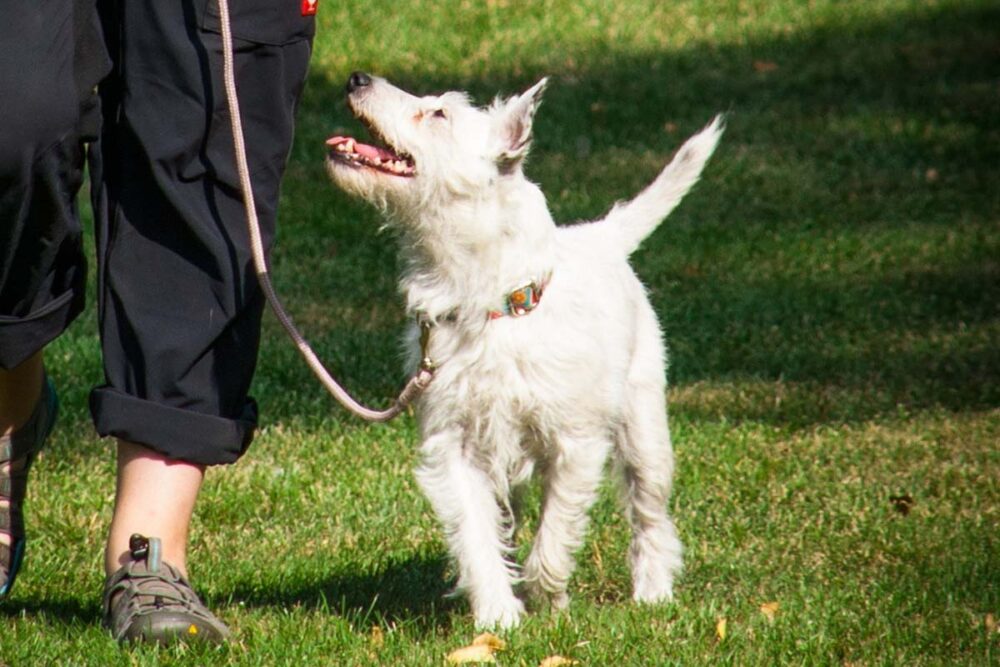
Whenever your puppy notices something a person, a dog, a cyclist, a weirdly placed traffic cone, mark it and reward. Praise, treats, calm voice, whatever works for you.
You’re teaching them:
“Yes, you saw that. And it’s okay. You don’t need to fixate, react, or run over. Just notice it… and bring your focus back to me.”
This is how you build neutrality.
This is how you get a dog who turns to you automatically.
This is how you get a dog who can cope in busy environments without falling apart.
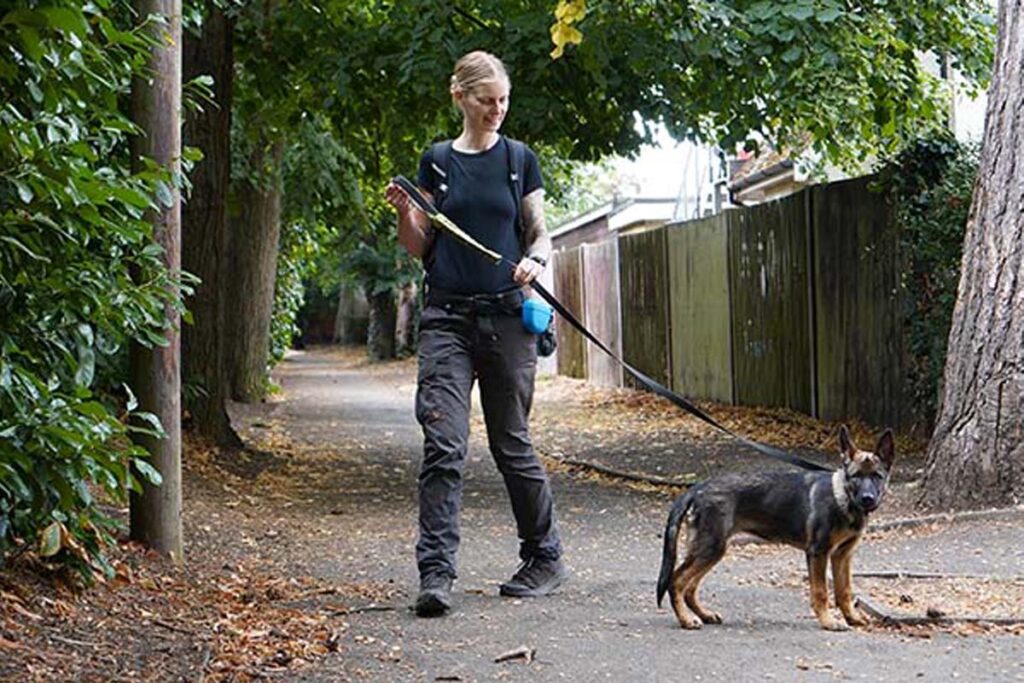
Leia is a brilliant example of this. From day one, we reinforced that she doesn’t get to greet everyone and now, at 8 months old, she can train anywhere. She sees something new and immediately looks to her person like, “Okay, what fun are we doing next?”
That’s the kind of confidence you want.
Say No. Really. Practise It.
In the UK especially, people feel SO guilty about telling strangers they can’t pet their puppy.
But advocating for your dog is one of the best skills you can learn early on.
Simple, polite phrases work beautifully:
- “Sorry, not today — we’re training.”
- “She’s feeling a little off, maybe next time.”
- “We’re practising calmness, thank you for understanding!”
It feels awkward once… but then it gets easier and you’ll start to feel empowered to advocate for your dog!
If you let everyone pet your puppy now, they start to expect it. Then suddenly, as they get older and far fewer people care to interact, you’ve got a frustrated adolescent on your hands and frustration easily turns into pulling, whining, barking, or full-on reactivity.
Teaching your dog to ignore the world is just as important as teaching them to enjoy it.
Avoid the Park Free-for-All
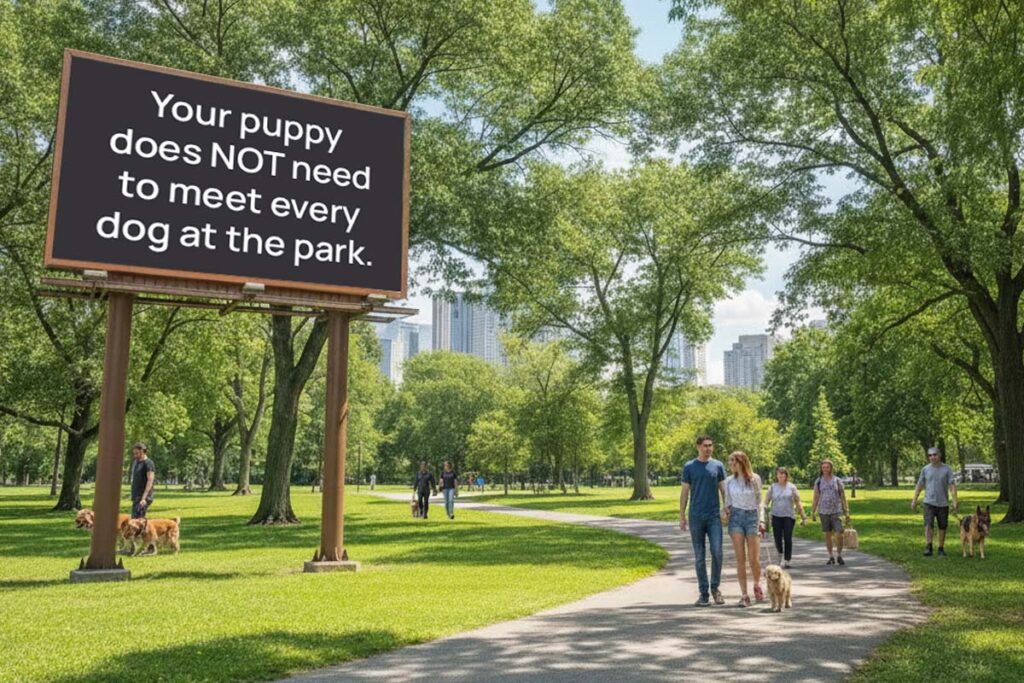
If I could put a billboard up in every UK town, it would say:
“Your puppy does NOT need to meet every dog at the park.”
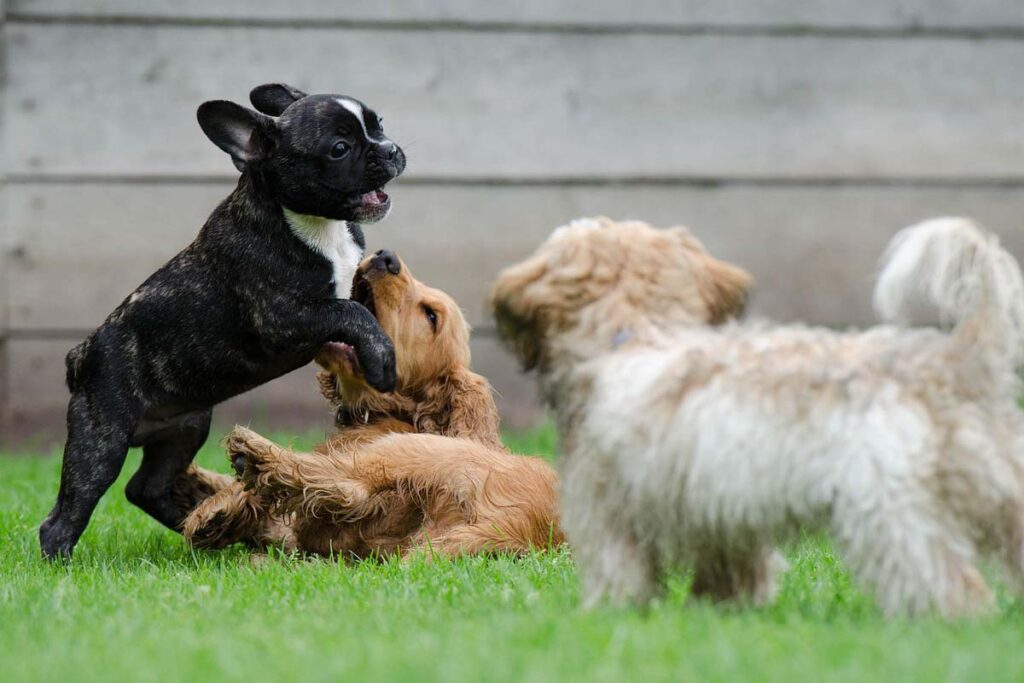
Dogs sprinting up to your puppy, tumbling around off-lead, overwhelming them, knocking them over…
Nope.
No thank you.
Absolutely not.
Choose your puppy’s early social partners carefully:
calm adult dogs, neutral dogs, dogs who won’t teach bad habits.
Aim for quality interactions, not quantity.
Tools & Setups That Make Puppy Socialisation Safe
Here are the simple things I rely on again and again:
- a normal backpack for pre-vaccine outings
- LOTS of treats or bits of their daily food
- A light line for controlled freedom
- quiet spaces (church car parks, garden centres, bus stops)
- calm role-model dogs
- predictable environments for first exposures
Nothing fancy. Just thoughtful.
Start Now. Today. Really.
The biggest thing I want every new dog owner to know?
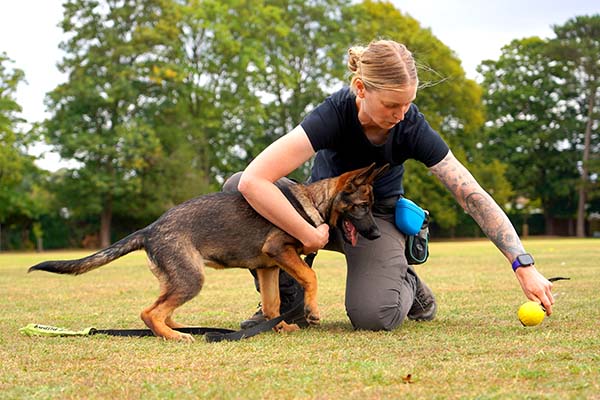
Start early, and do something every day.
It doesn’t have to be complicated.
It doesn’t have to be perfectly planned.
Google ideas. Borrow ideas. Wing it a little.
This phase goes SO quickly, and then you blink…
and your fluffy potato is suddenly a teenager with Opinions and Feelings.
Park meet-ups can come later.
For now, focus on calm exposure, gentle confidence-building, and bonding with your puppy in the real world.
They don’t need to meet everyone.
They just need to trust you while they discover everything.
Want to Dive Deeper Into Puppy Socialisation?
Come to our next Puppy Socialisation Class
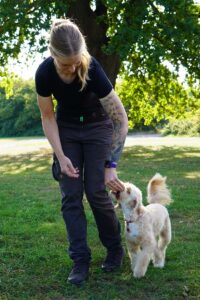
If this topic has your brain buzzing with “Oh wow… I didn’t know that,” then you’ll love our Puppy Socialisation Class ‘ Adventure Hour’ where you’ll learn:
- what good socialisation really looks like
- the most common mistakes (and how to avoid them)
- exactly how to build a calm, confident dog
- practical steps you can start using the very same day
Whether you’ve got a tiny new pup or you’re preparing for one, this is your chance to get clarity, ask questions, and feel genuinely supported.
We run a number of Puppy Socialisation Classes during the year. Click below for our next one or contact us for details.
Come join us and give your puppy the best possible start.