
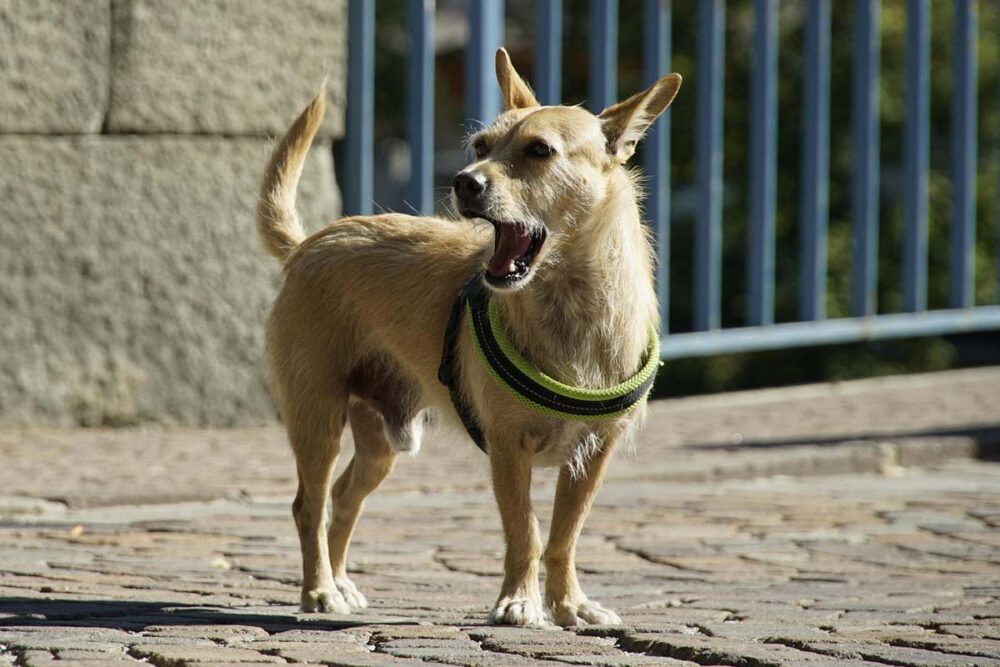









Have you ever found yourself standing on a walk while your adolescent dog barks relentlessly at another dog, a person, or an object they can’t get to? You might feel embarrassed, frustrated, or confused about why they’re behaving this way. Rest assured, you’re not alone – and this behaviour is both common and understandable.
Here’s what you need to know about frustration barking in adolescent dogs and how to handle it effectively.
Frustration barking is when your dog barks because they want access to something but can’t get it. Unlike fearful or alert barking, frustration barking often sounds intense and persistent, with body language that shows eagerness rather than fear.
Games like:
These strengthen your dog’s ability to pause and think rather than react impulsively.
If your dog barks and pulls towards something and is then allowed to greet or chase it, the behaviour is reinforced. Practise calm greetings only when your dog is quiet and under control.
Frustration barking can be worse if your dog’s mental and physical needs aren’t fully met. Add:
A fulfilled dog is generally calmer and less easily frustrated.
If greetings are too exciting, practise at a distance where your dog can notice another dog or person but remain calm. Reward focus on you, then gradually reduce distance over time as they gain self-control.
If you sometimes allow barking and pulling to work (e.g. letting them say hello when they bark), but other times you don’t, it creates confusion and increases the behaviour. Consistency is key to reducing frustration barking long-term.
If your dog’s barking escalates to lunging or aggression, if they struggle to settle in daily life, or if you feel overwhelmed managing it alone, seek guidance from a qualified, force-free trainer or behaviourist. Early intervention makes a huge difference in adolescence.
Frustration barking is a normal part of many adolescent dogs’ development. With patience, clear boundaries, and the right training approach, your dog will learn better ways to cope with excitement and disappointment. Remember – they’re not being ‘naughty’; they’re simply struggling to regulate big emotions in a big, exciting world.
Our targeted focus and engagement classes are designed to teach your dog patience, calmness, and better coping skills for real-life challenges
Click the WhatsApp button (bottom right) or
(Zero pressure. Just a conversation.)

We use cookies both to train dogs and to improve your experience on our site. By using our site, you consent to cookies.
Websites store cookies to enhance functionality and personalise your experience. You can manage your preferences, but blocking some cookies may impact site performance and services.
Essential cookies enable basic functions and are necessary for the proper function of the website.
Google Tag Manager simplifies the management of marketing tags on your website without code changes.
Stripe is a payment processing platform that enables businesses to accept online payments securely and efficiently.
Service URL: stripe.com (opens in a new window)
Statistics cookies collect information anonymously. This information helps us understand how visitors use our website.
Google Analytics is a powerful tool that tracks and analyzes website traffic for informed marketing decisions.
Service URL: policies.google.com (opens in a new window)
You can find more information in our Privacy & Cookie Policy and .